Poster Session
Poster Viewing Session — February 9, 2026
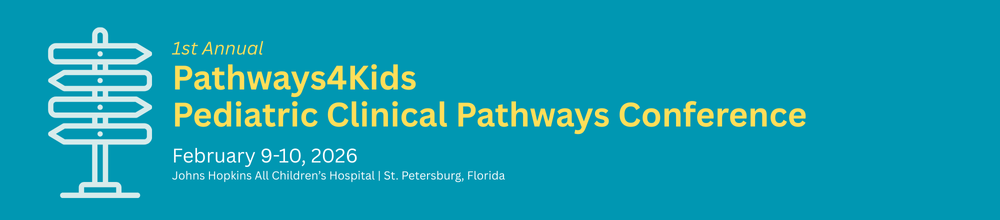
We’re excited to host the Pathways4Kids Poster Viewing Session on Monday, February 9, 2026.
This session marks a unique opportunity to showcase innovation and collaboration in pediatric clinical pathways. For the first time, participants will have the chance to explore research, quality improvement initiatives, and program work focused exclusively on advancing evidence-based pediatric care through pediatric clinical pathways. This dedicated session will highlight projects from across institutions that are shaping how children’s hospitals implement, measure, and sustain pathway-driven improvements in care.
Key Dates
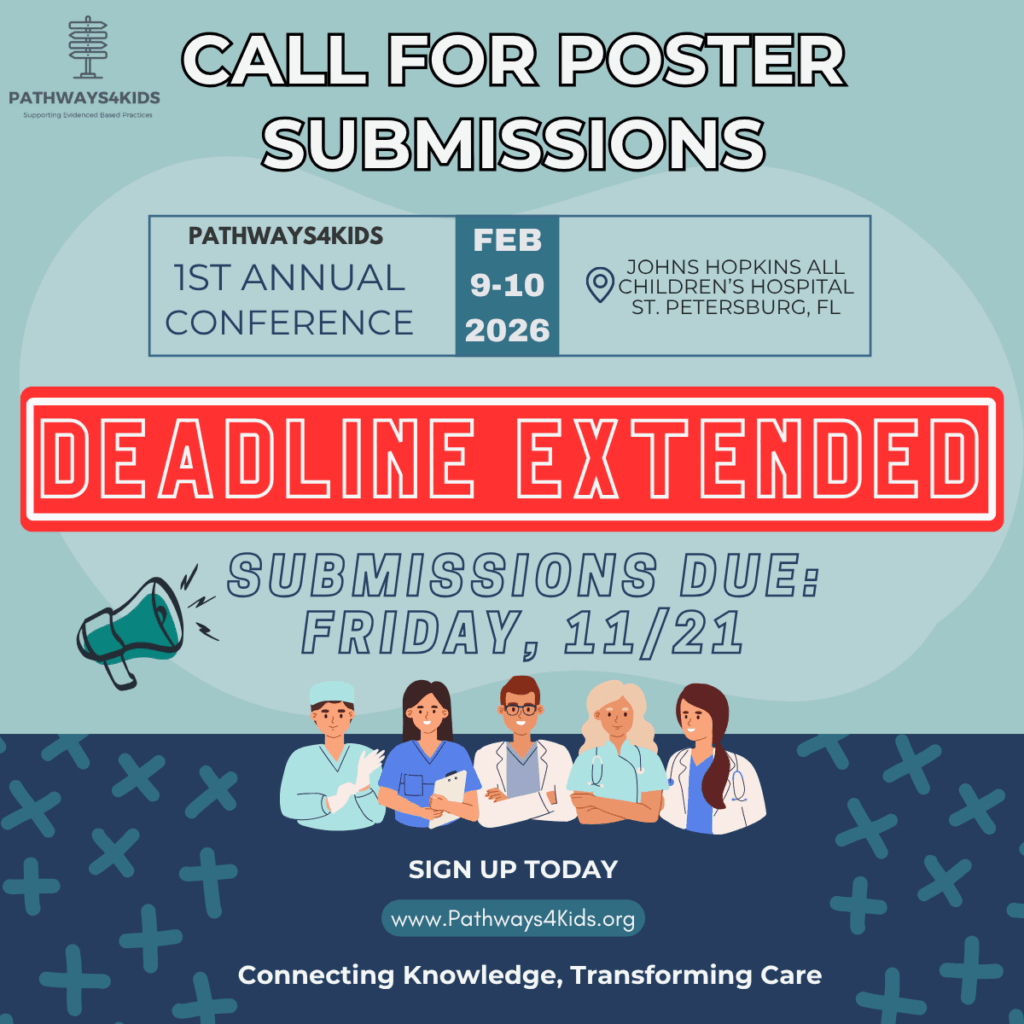
- Abstract submission opens: Monday, October 27, 2025 (conference registrants only)
- Abstracts due: Friday,
November 14, 2025EXTENDED! November 21, 2025 - Notification of acceptance: December 1, 2025
- Poster PDF Upload Due: January 12, 2026
- Poster session: February 9, 2026
If accepted, you’ll be invited to be present during the Poster Viewing Session on February 9, 2026. Please bring a printed poster. Poster board maximum size is 4 ft x 6 ft.
Who Can Submit
- Presenting authors must be registered conference attendees (session is open to registrants only).
Submission Requirements
Upload as one MS Word or PDF. Please include the following in your upload:
- Title of Poster
- Primary Author (name/credentials)
- Institution
- Co-Author(s)
- Abstract (≤ 500 words)
- Tables/Figures (e.g., run chart, pie chart, etc.)
- References (max 3)
File naming: Lastname_Firstname_P4KPoster.pdf (or .docx)
Poster Presentation Best Practices
Purpose of a Poster Presentation
A poster is a visual and concise way to share your project, program, or research. Its purpose is to:
- Introduce conference participants to the core ideas, outcomes, and lessons from your work.
- Use visuals—charts, graphs, tables, and images—to convey highlights at a glance.
- Capture interest and encourage conversation and collaboration.
- Help attendees quickly understand what was done, what was learned, and why it matters.
Designing an Effective Poster
- Display your title and author(s) clearly at the top.
- Keep text minimal—focus on the key points rather than full paragraphs.
- Avoid using all capital letters; use headings, color, and layout for emphasis instead.
- Incorporate visuals that tell the story in under a minute.
- Arrange sections so ideas flow logically from one to the next.
- Design for readability from about 3 feet away.
- Highlight both successes and lessons learned—whether or not outcomes were as expected.
A clear structure often includes:
- Background or Context
- Objectives or Aims
- Methods / Program Description
- Results or Evaluation
- Conclusions
- Next Steps / Future Plans
A great poster should leave viewers with a new insight, idea, or resource to take back to their own setting.
Consider providing a brief handout or QR code linking to additional resources or your contact information. Business cards are also welcome.
Printing & Display
- Bring a printed poster sized to fit horizontal 4 ft x 6 ft poster boards.
- Teams are encouraged to feel free to use whatever template or format they feel is best. For convenience, we have provided a template example below
- Push pins will be provided on site.
- Details of when to hang your poster will be sent in a separate email closer to the conference
Poster Session Etiquette
- Arrive during the designated setup time to hang your poster before the session begins.
- Remain near your poster for the duration of the viewing session to discuss your work and answer questions.
- Bring optional handouts or cards for attendees who’d like to connect later.
- Remove your poster promptly at the end of the session to allow the next group to set up.
Any posters left after the removal period may be discarded.
CME Note
While the poster session is part of the conference, it will not be CME-accredited.